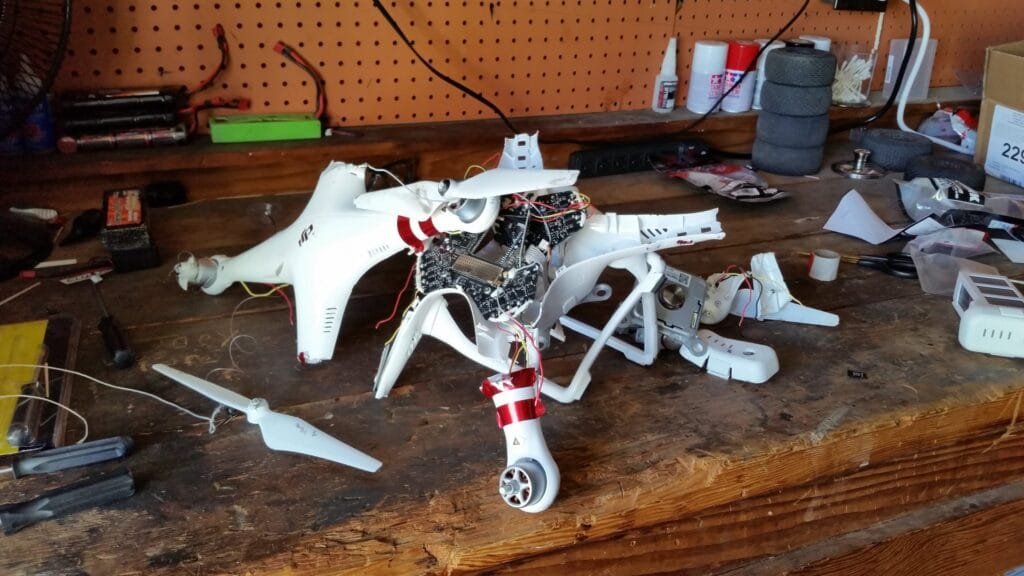
Primary causes of drone crashes
Casual but informative breakdown of why drones fall out of the sky — and what you can do to avoid it.
Introduction
Drones are awesome tools — they map land, capture cinema-style footage, inspect infrastructure, and do dangerous jobs without putting people at risk. But they also crash. Sometimes it’s a clipped propeller and a dented fuselage, and sometimes it’s a far worse outcome involving people or property. Understanding the common causes of drone crashes helps you fly safer, choose better gear, and make smarter operational decisions.
Below I walk through the primary causes you’ll see again and again in accident reports and studies — human error, power problems, interference and signal loss, sensors and software, weather, design/mechanical failures, and operational/regulatory mistakes — and then give practical ways to reduce your risk.
Snapshot: how crashes are investigated
In the U.S., serious small unmanned aircraft (sUAS) accidents are tracked by the Federal Aviation Administration (FAA) and investigated by the National Transportation Safety Board (NTSB) when appropriate. Internationally, agencies like EASA and national air-accident branches cover investigations, and specialists publish human-factors studies to look for systemic causes. These investigations reveal recurring themes that apply to hobbyists, commercial operators, and even large, coordinated drone shows.¹²³
1. Human error (pilot mistakes & poor planning)
Human error is still the number-one root cause across aviation — and drones are no exception. Pilot mistakes show up as bad decision-making (flying in unsuitable conditions), poor situational awareness (losing visual line of sight), misjudging battery or distance, incorrect pre-flight checks, and inadequate training. Studies that apply human-factors frameworks to UAV incidents consistently identify operator error and supervisory/organizational issues as top contributors.³⁴
Common practical examples:
- Launching with a partially charged or degraded battery.
- Flying beyond visual line-of-sight for a pilot who isn’t trained or legally authorized.
- Skipping compass/calibration checks before takeoff.
- Poor mission planning (e.g., not setting geofences or keeping the flight path clear of obstacles).
2. Power problems: batteries & power systems
Lithium-polymer (LiPo) batteries are great for high energy density, but they require respect. Running low mid-flight, battery cell imbalance, internal short-circuits, or degraded cells can cause sudden power loss and uncontrolled descents. Operators frequently underestimate how much reserve is needed for returning and landing, and batteries older than a few dozen cycles can behave unpredictably if not managed correctly.⁵
Mitigations: always check state-of-health, use smart-charging habits, keep conservative reserves (many experienced pilots avoid letting batteries drop below ~30%), and replace batteries that show swelling, excessive voltage drop, or capacity loss.⁵
3. Radio link loss, interference, and GPS/compass issues
Drones depend on reliable radio control, telemetry, and satellite navigation. Signal loss or interference can come from tall buildings, power lines, crowded RF environments, or intentional jamming. GPS or compass errors — caused by magnetic interference, poor calibration, or multi-path in urban canyons — can result in erratic positioning, flies-to-unknown points, or failed “return-to-home” behavior.⁶⁷
Many serious incidents stem from a sequence where the pilot loses a telemetry link and the drone’s autonomous logic (or pilot reaction) leads to a bad outcome. Always know your failsafe settings and practice what the drone will do when it loses signal.⁶
4. Weather & environmental conditions
Wind gusts, heavy rain, icing, and poor visibility are obvious hazards. Even moderate winds can overpower lightweight multirotors, especially when close to obstacles or when flying heavy payloads. Temperature extremes affect battery performance and sensor accuracy. Also watch for turbulence created by buildings or terrain (e.g., rotor wash and gusts near cliffs or rooftops). Weather-related incidents are common and often preventable with better pre-flight weather checks and conservative go/no-go decisions.⁷
5. Mechanical, motor, ESC, and prop failures
Physical failures — cracked props, a failing motor, ESC (electronic speed controller) glitches, or poor maintenance — will bring a drone down. Vibration-related loosening, loose connectors, or poorly secured payloads can cause in-flight damage and loss of control. Quality control matters: cheap parts or poorly assembled drones can have latent defects.⁸
Preventive steps: inspect props and motors before every flight, torque mount points consistently, and replace suspect parts promptly. Keep a maintenance log for repetitive checks.⁸
6. Software, firmware, and mission-planning errors
Flight-control firmware, autopilot software, mission-planning parameters, or swarm-coordination files can contain bugs, bad defaults, or operator mistakes. A recent high-profile drone-show incident (where many drones mis-positioned and collided) illustrates how a chain of mis-set parameters and procedural lapses can cascade into a major accident. Software regressions, untested updates, or incorrect mission files are modern causes of crashes that require solid verification and redundancy.⁹
7. Sensor failures (IMU, barometer, downward vision)
Drones rely on multiple sensors (IMU/gyros, magnetometer, barometer, optical flow sensors) for stable flight. A bad sensor reading or failed sensor fusion (incorrectly combining GPS, IMU, and vision inputs) can confuse the controller and produce unexpected behavior. This is especially critical for autonomous or assisted modes — if the drone thinks it’s hovering when it’s actually drifting, things go wrong fast.⁹
8. Collisions (objects, birds, other aircraft)
Collisions remain a frequent and obvious cause: trees, towers, power lines, and other aircraft (including other drones) can end a flight. Visual observers reduce but do not eliminate this risk, and in congested airspace collision risk is higher. Use obstacle-detection features where available and plan routes that minimize exposure to hazards.¹⁰
9. Operational & regulatory mistakes (bad waivers, insufficient safety buffer)
Operational missteps — like flying a crowd without proper waivers, misjudging safety buffers, or ignoring company procedures — are recurring contributors. The recent investigative reports show that “combined errors” (multiple small lapses in procedures, inadequate cross-checks, or rushed launches) often explain why incidents become serious. Organizational culture and checklists matter.¹²
Putting it together: common crash chains
Many crashes aren’t caused by a single failure but by a chain: a marginal battery + delayed return decision + gusty conditions + poor signal handling = crash. Investigations repeatedly show that breaking any link in the chain (better planning, conservative battery margins, clear go/no-go criteria, and rehearsed lost-link procedures) prevents accidents.³¹³
Practical checklist to reduce crash risk
- Pre-flight health check: battery state-of-charge and cell balance, props, motor spin, connectors, GPS lock, compass calibration.
- Environmental scan: weather, RF environment, obstacles, and possible magnetic interference.
- Mission planning: flight path, geofence, altitudes, failsafes, emergency landing options.
- Software & firmware: ensure tested firmware, verified mission files, and rollback plan for updates.
- Conservative margins: keep reserve battery capacity and avoid flying in marginal conditions.
- Training & SOPs: maintain training, run simulated lost-link drills, and document procedures.
- Maintenance log: track part replacements, crashes, and anomalies.
Conclusion
Drones are complex systems that sit at the intersection of hardware, software, humans, and the environment. Crashes typically stem from a mix of human decisions, power or mechanical failures, signal and sensor issues, or poor procedural controls. The good news: most of these causes are manageable. Conservative planning, proper maintenance, respect for environmental and regulatory limits, and continuous training will dramatically reduce your crash risk.
Fly safe, build good habits, and remember — a little extra prep before you take off is cheaper than one hurried recovery after you land in a tree.

Leave a Reply