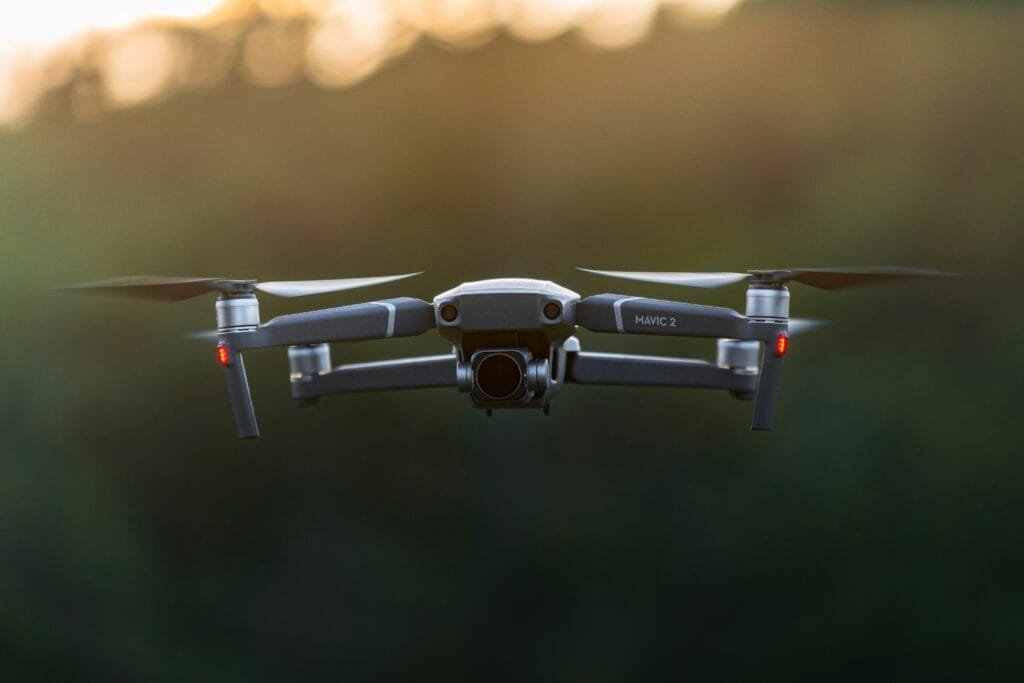
Considerations When Buying a Drone for Personal Use and Commercial Use
Buying a drone today is not as simple as picking the one with the best camera or the longest flight time. As someone who has worked in drone sales and consulting for years, I can confidently say that the “right” drone depends entirely on how you plan to use it. A weekend hobbyist capturing vacation footage has very different needs than a real estate professional, surveyor, or inspection contractor flying for revenue.
The drone market has matured significantly. With platforms from manufacturers like DJI, Autel, Skydio, and Parrot offering everything from compact recreational models to enterprise-level aircraft, buyers must evaluate performance, reliability, regulatory compliance, and long-term support. In this guide, we will break down the most important considerations for both personal and commercial buyers—and help you make an informed investment.
Personal Use vs. Commercial Use: Understanding the Difference
Before you compare specs, you need clarity on one major question: Will you use the drone purely for recreation, or will it generate income?
Personal use generally includes recreational flying, travel photography, social media content, and learning flight skills. These users prioritize portability, ease of use, and image quality at a reasonable price.
Commercial use involves any operation where the drone supports business activity—real estate marketing, construction documentation, mapping, agriculture, inspections, public safety, or media production. Commercial operators must consider regulatory compliance, reliability, data accuracy, redundancy, insurance, and long-term ROI.
The distinction matters not only for hardware selection but also for licensing, insurance, and operational requirements.
Top 10 Considerations When Buying a Drone
- Intended Purpose
- Camera Quality and Sensor Size
- Flight Time and Battery Management
- Range and Signal Reliability
- Obstacle Avoidance and Safety Features
- Portability and Build Quality
- Regulatory Compliance
- Software Ecosystem and Compatibility
- Service, Warranty, and Parts Availability
- Total Cost of Ownership
Let’s break these down in detail.
1. Intended Purpose
This is the foundation of your buying decision. If you are purchasing a drone for scenic photography or social media, a lightweight foldable platform with a 4K camera may be more than sufficient.
However, if you are mapping acreage, inspecting cell towers, or providing thermal inspections, you’ll need specialized sensors, RTK positioning, or interchangeable payload systems. Enterprise drones are built for accuracy, repeatability, and reliability—features that hobby-level drones simply are not engineered to provide.
2. Camera Quality and Sensor Size
Camera specifications are often the first thing buyers notice. While 4K or even 5.1K video sounds impressive, sensor size is often more important than resolution alone.
For personal use, a 1/1.3” or 1” sensor is typically more than adequate. These sensors produce excellent results for vacation footage, YouTube content, and family memories.
Commercial photographers and videographers may require larger sensors, adjustable apertures, higher dynamic range, and advanced color profiles. Surveying and mapping professionals need mechanical shutters and precise image capture intervals to avoid motion distortion.
3. Flight Time and Battery Management
Most consumer drones advertise flight times between 25 and 45 minutes. In real-world conditions—wind, maneuvering, and safety reserves—you can expect slightly less.
For hobbyists, this is rarely a deal breaker. Extra batteries are relatively affordable.
For commercial operators, flight time directly impacts productivity. Mapping projects, inspections, and media shoots require multiple batteries, charging hubs, and sometimes vehicle-based charging solutions. Downtime equals lost revenue.
4. Range and Signal Reliability
Modern transmission systems provide several miles of range under ideal conditions. However, urban interference, terrain, and regulatory limits often reduce usable distance.
For personal use, long range is typically less critical than signal stability and image transmission quality.
Commercial pilots need strong, interference-resistant transmission systems to maintain safe control and consistent data capture—especially in industrial or congested environments.
5. Obstacle Avoidance and Safety Features
Advanced obstacle sensing has become a major selling point. Forward, backward, upward, and downward sensors significantly reduce collision risk.
For new pilots and hobbyists, these systems provide confidence and reduce the learning curve.
For commercial users, safety features protect equipment and clients’ property. However, experienced operators also understand that obstacle avoidance is a supplement—not a substitute—for skilled piloting.
6. Portability and Build Quality
Travelers and recreational flyers typically prefer foldable drones under 250g or compact designs that fit easily in backpacks.
Commercial drones may prioritize durability over portability. Industrial airframes are often weather-resistant and built to handle demanding job sites.
7. Regulatory Compliance
In the United States, recreational pilots must register drones above certain weight thresholds, while commercial operators must hold a Remote Pilot Certificate under FAA Part 107.
Additionally, Remote ID compliance is now mandatory for most drones. Buyers must confirm their aircraft meets current regulations.
Commercial operators should also evaluate airspace authorization requirements, waivers, and operational limitations.
8. Software Ecosystem and Compatibility
Hardware is only half the equation. Mapping, inspection, and enterprise operations rely heavily on software integration.
Ensure compatibility with photogrammetry platforms, mission planning apps, thermal analysis tools, or third-party integrations relevant to your industry.
9. Service, Warranty, and Parts Availability
One of the most overlooked aspects of buying a drone is post-sale support. Consumer drones may have basic warranty coverage, but turnaround times vary.
Commercial operators should consider extended warranties, replacement programs, and access to authorized repair centers. Fast service can mean the difference between staying on schedule and losing a contract.
10. Total Cost of Ownership
The drone’s purchase price is just the beginning. Consider:
- Extra batteries
- ND filters
- Carrying cases
- Software subscriptions
- Insurance
- Training and licensing
- Maintenance and replacement parts
A $1,000 drone can quickly become a $2,000 investment once fully equipped. Enterprise systems can scale much higher. Always evaluate long-term ROI rather than upfront cost alone.
Additional Considerations for Commercial Buyers
Redundancy and Reliability
Commercial drones may offer dual IMUs, dual compasses, and advanced return-to-home precision. These redundancies increase safety and reliability for critical operations.
Specialized Sensors
Industries such as agriculture, utilities, and public safety may require thermal, multispectral, or LiDAR payloads. These capabilities dramatically expand use cases but increase cost and complexity.
Insurance and Liability
Liability insurance is strongly recommended for commercial operators. Clients often require proof of coverage before granting flight access.
Making the Right Choice
As a drone sales expert, I advise customers to start with clear goals and realistic expectations. Buying more drone than you need can waste money. Buying too little drone can limit growth.
If you are entering the market recreationally, choose simplicity, reliability, and strong image quality. If you are launching or expanding a drone business, prioritize compliance, service support, scalability, and integration with professional workflows.
The right drone is not just a gadget—it is either a creative tool or a revenue-generating asset. Make your decision accordingly.
Footnotes
- Federal Aviation Administration – Recreational Flyers & Registration: https://www.faa.gov/uas/recreational_flyers
- Federal Aviation Administration – Part 107 Remote Pilot Certification: https://www.faa.gov/uas/commercial_operators
- Federal Aviation Administration – Remote ID Requirements: https://www.faa.gov/uas/getting_started/remote_id
- DJI Product Specifications: https://www.dji.com/products
- Autel Robotics Product Information: https://auteldrones.com
- Skydio Enterprise Solutions: https://www.skydio.com
- Parrot Professional Drones: https://www.parrot.com
- Drone Industry Insights Market Overview: https://droneii.com

Leave a Reply