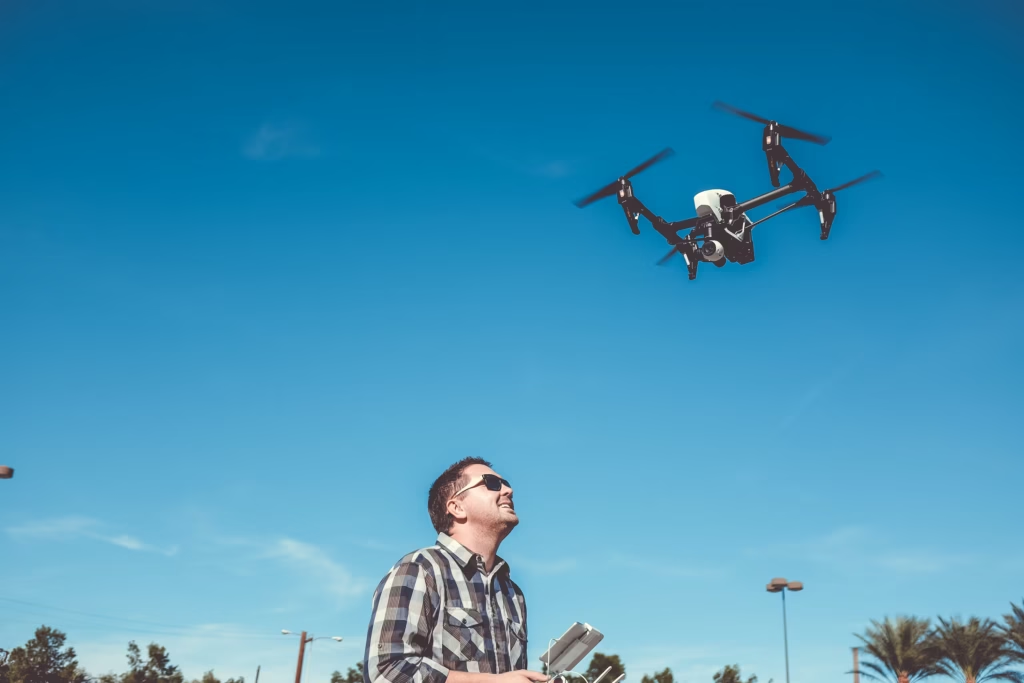
The Advantages of Attending a Drone Pilot Flying Course
The drone industry has evolved from a niche hobbyist market into a powerful professional tool used across construction, agriculture, public safety, filmmaking, infrastructure inspection, surveying, and logistics. As regulations tighten and commercial demand increases, the difference between a recreational flyer and a trained drone pilot becomes increasingly clear. While many new pilots attempt to teach themselves through online videos and trial-and-error flying, attending a structured drone pilot flying course offers significant advantages that accelerate skill development, improve safety, and increase earning potential.
As someone deeply involved in drone operations and pilot training, I’ve seen firsthand how formal instruction transforms both beginners and experienced flyers. A professional course does far more than teach takeoffs and landings. It builds discipline, technical understanding, regulatory awareness, and real-world flight competence that directly translates into safer and more profitable operations.
Top 10 Advantages of Attending a Drone Pilot Flying Course
- Structured, Accelerated Learning
- Regulatory and Airspace Mastery
- Improved Flight Safety and Risk Management
- Hands-On Experience With Professional Equipment
- Emergency Procedure Training
- Industry-Specific Skill Development
- Higher Employability and Credibility
- Insurance and Liability Preparedness
- Networking and Industry Connections
- Long-Term Cost Savings and Equipment Protection
1. Structured, Accelerated Learning
One of the biggest advantages of attending a drone pilot course is the structured learning environment. Instead of piecing together fragmented information from forums and video tutorials, students follow a comprehensive curriculum designed to build skills progressively. Concepts such as aerodynamics, flight modes, GPS functionality, battery management, weather assessment, and mission planning are introduced in logical sequence.
Structured programs eliminate guesswork. Instructors identify bad habits early, correct stick control issues, and ensure pilots understand why systems behave the way they do. This dramatically shortens the learning curve and builds confidence much faster than self-teaching.
2. Regulatory and Airspace Mastery
Drone laws are complex and constantly evolving. In the United States, commercial operators must comply with FAA Part 107 regulations, understand airspace classifications, and properly use tools such as LAANC authorization systems. A formal course ensures pilots understand:
- Controlled vs. uncontrolled airspace
- Temporary flight restrictions
- Remote ID requirements
- Night operation rules
- Waiver processes
Understanding airspace prevents costly violations and protects both your reputation and your business. Many self-taught pilots underestimate the seriousness of regulatory compliance until it’s too late.
3. Improved Flight Safety and Risk Management
Professional training emphasizes safety culture. Students learn to conduct pre-flight inspections, assess environmental risks, analyze obstacles, and evaluate weather conditions before takeoff. They are taught risk mitigation strategies that reduce the likelihood of crashes and liability incidents.
Instructors simulate real-world scenarios including signal loss, compass interference, battery anomalies, and unexpected obstacles. Exposure to these situations in a controlled learning environment builds muscle memory and calm decision-making under pressure.
4. Hands-On Experience With Professional Equipment
Many pilots purchase a drone without fully understanding its capabilities. In a course environment, students gain exposure to:
- Advanced flight controllers
- Different GPS modes
- Manual and ATTI flight modes
- Thermal cameras
- RTK positioning systems
- Mapping software platforms
This hands-on experience builds technical competence that cannot be replicated through theory alone. Students also learn proper firmware updates, calibration techniques, and maintenance routines that extend equipment lifespan.
5. Emergency Procedure Training
What separates an amateur from a professional is how they respond when something goes wrong. Drone pilot courses teach emergency management procedures such as:
- Return-to-home configuration
- Manual recovery in ATTI mode
- Battery failure response
- Compass and IMU recalibration
- Emergency landing site selection
These skills prevent small issues from escalating into catastrophic crashes. A pilot who understands emergency protocols operates with greater control and confidence.
6. Industry-Specific Skill Development
Drone applications vary widely by industry. A high-quality training course often includes modules tailored to specific commercial uses such as:
- Real estate photography
- Construction site progress tracking
- Agricultural spraying and crop analysis
- Roof and infrastructure inspection
- Photogrammetry and 3D mapping
- Public safety and search operations
Learning these workflows allows students to transition directly into revenue-generating activities rather than experimenting blindly in the field.
7. Higher Employability and Credibility
Clients and employers increasingly look for trained and certified drone pilots. Completing a recognized flying course demonstrates professionalism and commitment to safety. It signals that you understand regulations, operational procedures, and technical best practices.
For those seeking employment with surveying firms, media companies, or engineering firms, formal training often becomes a deciding factor in hiring decisions.
8. Insurance and Liability Preparedness
Drone accidents can cause property damage, personal injury, or costly claims. Courses typically educate pilots on insurance requirements, liability exposure, and operational documentation. Understanding incident reporting procedures and risk mitigation reduces legal vulnerability.
Insurance providers often look favorably upon pilots with documented training, which can positively impact coverage approval and premiums.
9. Networking and Industry Connections
Training programs bring together aspiring pilots, experienced operators, instructors, and industry professionals. These relationships frequently lead to:
- Job opportunities
- Collaborative projects
- Mentorship relationships
- Equipment recommendations
- Business referrals
The drone industry is relationship-driven. The connections formed in training environments often become long-term professional assets.
10. Long-Term Cost Savings and Equipment Protection
Crashes are expensive. Broken gimbals, damaged sensors, and lost drones can quickly exceed the cost of professional training. Proper instruction significantly reduces the likelihood of equipment damage.
Students learn battery health management, safe transport procedures, firmware update best practices, and storage guidelines. These small but critical habits extend drone lifespan and reduce operational costs over time.
Beyond the Basics: Building Professional Discipline
A formal drone pilot course instills discipline that separates hobbyists from professionals. Students learn flight logging, mission documentation, client communication, and operational checklists. These systems create consistency and reliability — traits that clients value highly.
Professional discipline also enhances decision-making. Pilots trained in structured environments are less likely to take unnecessary risks or operate outside regulatory limits. They understand that reputation and compliance are long-term assets.
Confidence Under Pressure
Confidence is not built through casual flying in open fields. It is developed through supervised exposure to controlled challenges. Instructors introduce obstacle navigation, precision landings, confined-space operations, and scenario-based exercises.
This type of repetition builds reflexes and situational awareness that self-guided pilots often lack. When operating near infrastructure, people, or high-value property, that confidence makes a measurable difference in safety outcomes.
Staying Current in a Rapidly Evolving Industry
Drone technology evolves quickly. New firmware updates, Remote ID standards, and automation tools constantly change operational procedures. Professional courses frequently update their curriculum to reflect regulatory and technological changes.
By attending formal training, pilots remain current with best practices rather than relying on outdated online content. Staying informed protects both compliance status and competitive advantage.
Final Thoughts
Attending a drone pilot flying course is not simply about learning to control an aircraft. It is about developing operational discipline, regulatory awareness, emergency response capability, and industry-specific competence. The investment pays dividends in safety, professionalism, and long-term earning potential.
In today’s competitive drone marketplace, skill alone is not enough. Structured training provides the foundation necessary to operate confidently, legally, and profitably. Whether you are entering the field for the first time or expanding into commercial services, formal drone pilot education is one of the smartest investments you can make in your aviation journey.
Footnotes
- Federal Aviation Administration – Unmanned Aircraft Systems (UAS) Regulations: https://www.faa.gov/uas
- FAA Part 107 Small UAS Rule Overview: https://www.ecfr.gov/current/title-14/chapter-I/subchapter-F/part-107
- FAA LAANC Information: https://www.faa.gov/uas/programs_partnerships/data_exchange
- National Transportation Safety Board – Drone Safety Resources: https://www.ntsb.gov
- Association for Uncrewed Vehicle Systems International (AUVSI): https://www.auvsi.org
- NOAA Aviation Weather Resources: https://www.weather.gov/aviation
- Drone Industry Insights Market Report: https://droneii.com
- FAA Remote ID Information: https://www.faa.gov/uas/getting_started/remote_id

Leave a Reply